
In developed countries around the world, Religious Studies has long been a fundamental science that receives significant attention in research and teaching. In Vietnam, recently, Religious Studies has become a field of focus for development, especially at the university level, alongside established centers and institutions dedicated to religious studies.
In 2016, the University of Social Sciences and Humanities, Vietnam National University, Hanoi, allowed the first-year enrollment of 50 students in the Religious Studies major, based on the Vietnam National University, Hanoi's aptitude test.
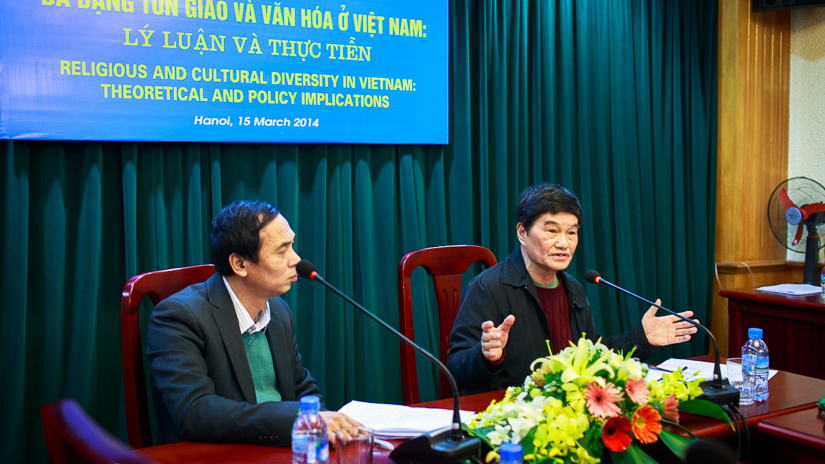
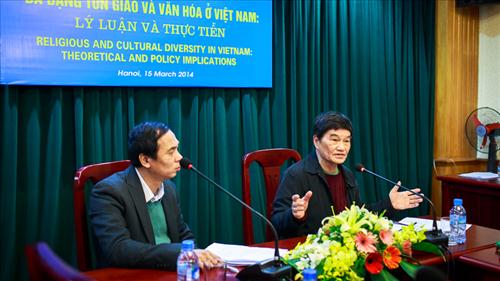
Workshop on Religious and Cultural Diversity in Vietnam organized by the University of Social Sciences and Humanities (March 2014)
As a specialized field of study but oriented towards broad interdisciplinary scientific development, the Religious Studies major, under the Department of Religious Studies, Faculty of Social Sciences and Humanities, Vietnam National University, Hanoi, has a division of specialization into three knowledge blocks: 1. Specialized knowledge in religious culture (Spiritual tourism, Religious ethics and morality, Religious art and history of religious art, Religious symbolism, Beliefs and festivals, Spiritual history, Religious aesthetics, etc.); 2. Specialized knowledge in specific religions (Buddhism, Catholicism, Protestantism, Islam, Hoa Hao Buddhism, Cao Daiism, etc.); 3. Specialized knowledge in religious policies, guidelines, and practices.
In addition, the two main training directions for the field are applied religion and religious theory, along with skills and professional expertise.
With the aforementioned innovative and distinctive interdisciplinary development directions, the Religious Studies major, under the Department of Religious Studies, has affirmed its position in the field of religious education and research alongside other majors with religious studies such as History, Oriental Studies, and Anthropology…
Religious Studies provides knowledge and skills in the field of religion to serve research, teaching, training, management, or work in state administrative agencies, research institutes, centers for religious studies, especially in the fields of journalism and media, tourism, diplomacy, culture, arts, and spiritual research...
As a specialization within the Faculty of Philosophy since 1990, thanks to the efforts of the Department of Religious Studies, the attention of the Faculty of Philosophy and the Hanoi University of Social Sciences and Humanities, the Department has perfected a training system comprising three levels of study: Bachelor's, Master's, and Doctoral degrees in Religious Studies. After completing the Bachelor's program, students can continue their studies to obtain a Master's or Doctoral degree.
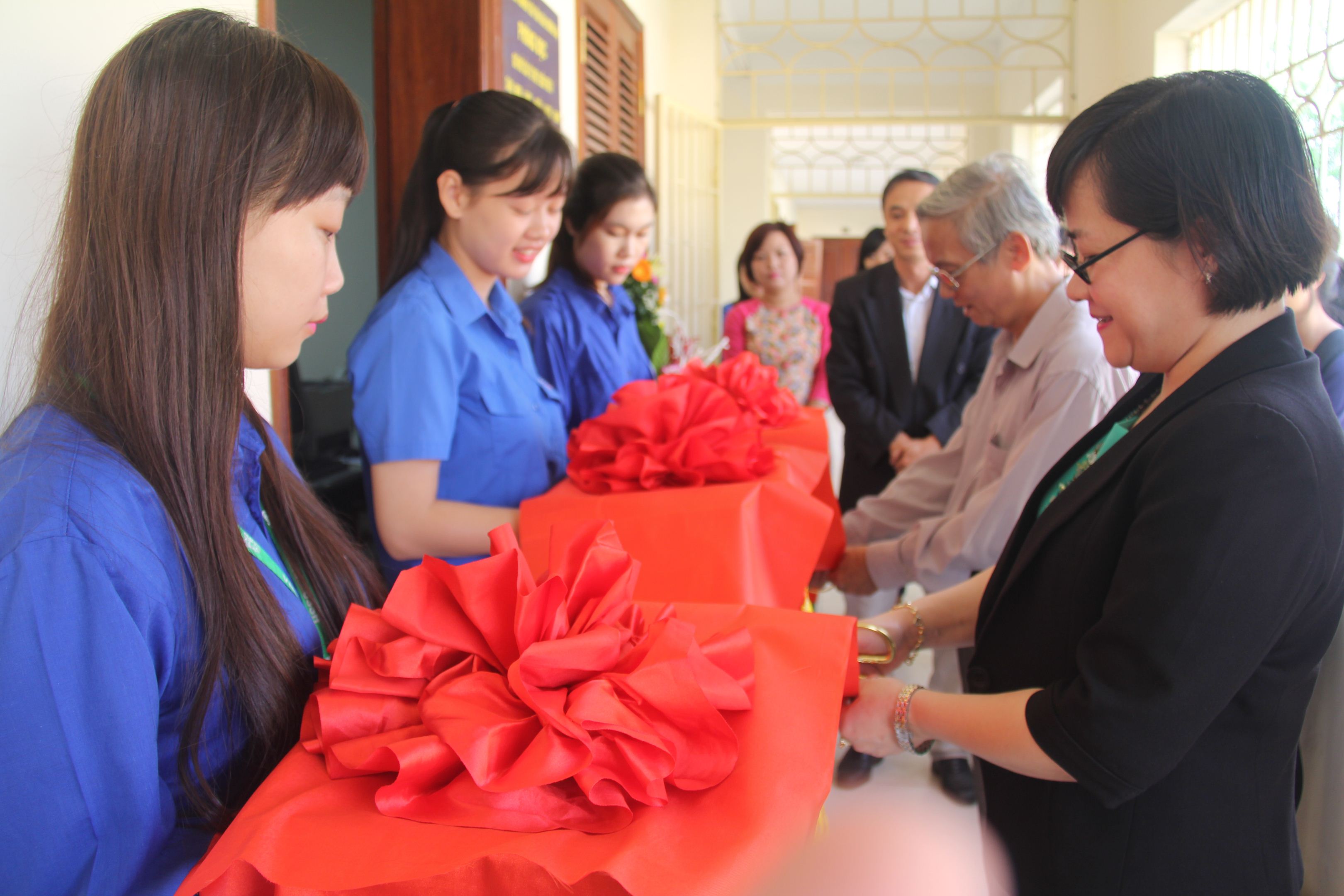
Ribbon-cutting ceremony for the opening of the reading room and religious/belief document room at the University of Social Sciences and Humanities (November 2015)
In addition, students also have the opportunity to study a second major in the following fields: Journalism, Oriental Studies, Management Science, History, Tourism and Travel Service Management, International Studies, Literature at the University of Social Sciences and Humanities, or English Language or Chinese Language at the University of Foreign Languages (VNU) after completing their first year.
The Department of Religious Studies, Faculty of Social Sciences and Humanities, Vietnam National University, Hanoi, is a prestigious institution for religious studies in Vietnam, with extensive experience in training, research, teaching, and social orientation regarding religion.
The formation and growth of the Department of Religious Studies, Faculty of Social Sciences and Humanities, Vietnam National University, Hanoi, along with the orientations in training and recruiting full-time students for the field, have demonstrated the pioneering mission of the Faculty of Social Sciences and Humanities in promptly and effectively grasping the practical needs of political, economic, and social life, as well as the cultural and spiritual needs of each individual Vietnamese person.
Author:Pham Hai
Newer news
Older news

