
Breakthroughs in team building
Recognizing that high-quality, highly skilled human resources are a key strategic factor in the school's development, the Party Committee issued a conclusion on "Strengthening the training and development of staff towards achieving international standards" to guide the implementation of many positive policies and focus heavily on investing in staff development. Each year, nearly 200 staff members go abroad for teaching, studying, and research. Within the framework of internationally recognized training programs, the school has sent dozens of lecturers to study and improve their foreign language skills and professional and managerial abilities abroad, and has rewarded staff members who have achieved high results in scientific research, especially international publications. Many preferential policies have been implemented, creating conditions for young staff members to quickly obtain doctoral degrees and enhance their professional capabilities.
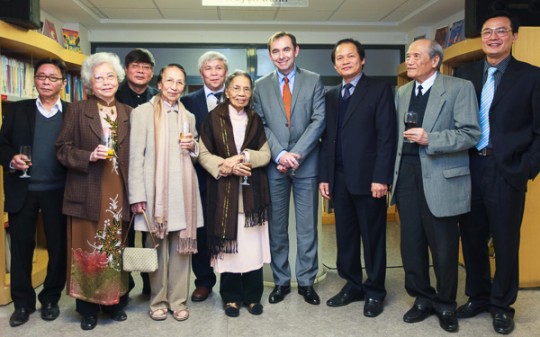
Professor, Doctor, People's Teacher Nguyen Van Khanh (Party Secretary, Rector of the University of Social Sciences and Humanities) and the Ambassador of the Republic of France.Jean-Noël Poirier shares his joy with Associate Professor Dang Thi Hanh and the teachers of the School on the occasion of Professor Dang Thi Hanh receiving the award.Order of Academic Palms from the French Government, February 2013.
The university's faculty currently comprises 524 people, of whom 95.5% hold postgraduate degrees. Over 54% of the faculty hold doctoral degrees, and there are 96 professors and associate professors (accounting for nearly 30% of the total faculty). There are 103 faculty members pursuing doctoral studies and 16 faculty members pursuing master's degrees. The percentage of faculty with postgraduate degrees and scientific titles has exceeded the target set by the 26th Party Congress of the university, and is also a high percentage for a university in Vietnam today.
Pioneering innovation in training activities.
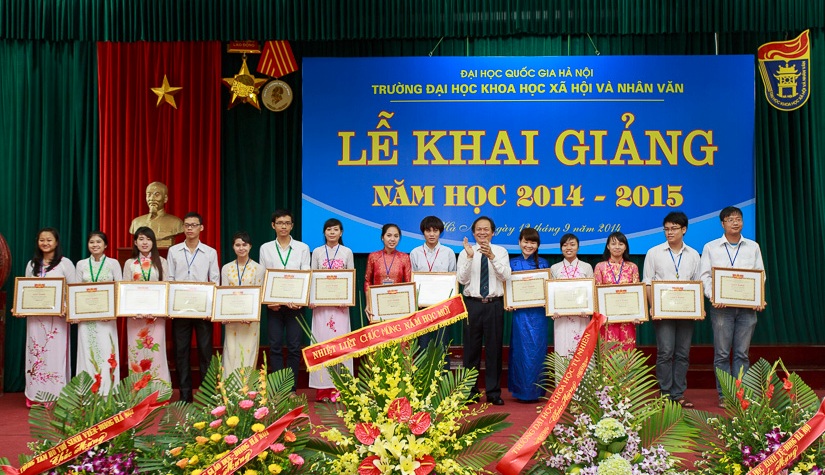
With a tradition and reputation as a leading institution for social sciences and humanities in Vietnam, the University has trained thousands of students and trainees in many of its strong disciplines such as History, Literature, Philosophy, Linguistics, etc. Many prominent political activists and scientists of the country have studied, trained, and grown from this institution. The University's graduates are found throughout the country, and many have become founders of training institutions and research institutes. The University is aware of its pioneering role in training and strives to make timely innovations in line with the general trends of global education and training.
The transition from a semester-based to a credit-based system at all levels of education has been the most notable success of the university in recent years. Students have affirmed their central role in the training process. Training management has become more flexible, and access to international training standards has been enhanced. To date, credit-based training has truly become more in-depth and has had a positive impact on improving the quality of education. In the first four cohorts of credit-based training (from 2007 to 2010), 400 students graduated early, from one semester to one academic year, with over 85% graduating on time and 90% graduating with a GPA of "good" or higher. Each year, between 500 and 600 international students enroll.
Besides continuing to open new training programs to meet social needs, the Party Committee of the university also advocates for the development of high-quality training programs, aiming to gradually achieve international standards, and expanding international collaborative training programs. During the period 2010-2015, the scale of doctoral training and international student enrollment increased significantly. Each year, the university trains approximately 140 doctoral students, including about 20 international students. The proportion of postgraduate training to the total regular training is approximately 37%. This ratio is gradually approaching the standards of a research university.
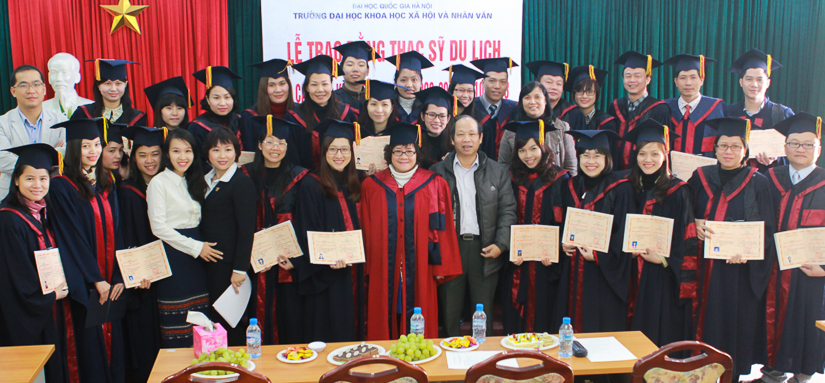
Quality assurance in education is also a pioneering area for the University, and it has quickly demonstrated its effectiveness in training. In addition to participating in and achieving national quality standards, the University has also begun implementing accreditation for several training programs according to the standards of the Association of Southeast Asian Universities (AUN). In 2013, the University completed the evaluation of its Bachelor of Linguistics program according to AUN standards and is preparing to implement the evaluation of its Oriental Studies program. This is a new step with high determination aimed at opening up opportunities to achieve regional and international quality standards in the University's training activities in the near future.
Scientific research and international cooperation have seen remarkable developments.
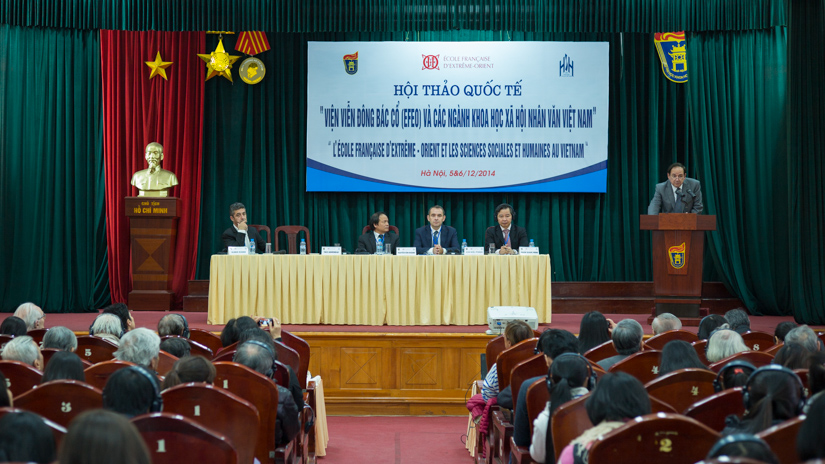
The international scientific conference "The Far East Archaeological Institute (EFEO) and the Social Sciences and Humanities of Vietnam" was organized by the University of Social Sciences and Humanities in December 2014.
The Party Committee of the University of Social Sciences and Humanities has identified improving the quality of scientific research as the foundation for enhancing the quality of training, the quality of the faculty, and building the scientific prestige of the University. A highlight of this activity is the effective participation in key national-level scientific programs. These research projects have provided scientific arguments for the development of socio-economic policies, the protection of border and maritime sovereignty, and the summation of 30 years of reform. Some notable projects include: "Promoting Vietnam's intellectual resources to serve the cause of national rejuvenation in the 21st century"; “Religion in a socialist rule of law state and the issue of a secular state in Vietnam”… The Policy Advisory Council, comprising leading scientists from within and outside the university, has provided valuable advice and recommendations to the Party and State leaders on cultural and social development issues in the new era, such as advice on the East Sea, Oc Eo culture, and the building and development of Vietnamese culture and people to meet the requirements of sustainable national development… The number of research projects carried out by the University in the past 5 years includes 22 State-level and Protocol projects, 73 projects at the Hanoi National University level, and 103 projects at the institutional level. In addition, 2,762 research results have been published, including 188 international articles, 21 science and technology awards at various levels, including three Ho Chi Minh Awards, two State-level awards, and 16 awards at the Hanoi National University and ministerial levels.
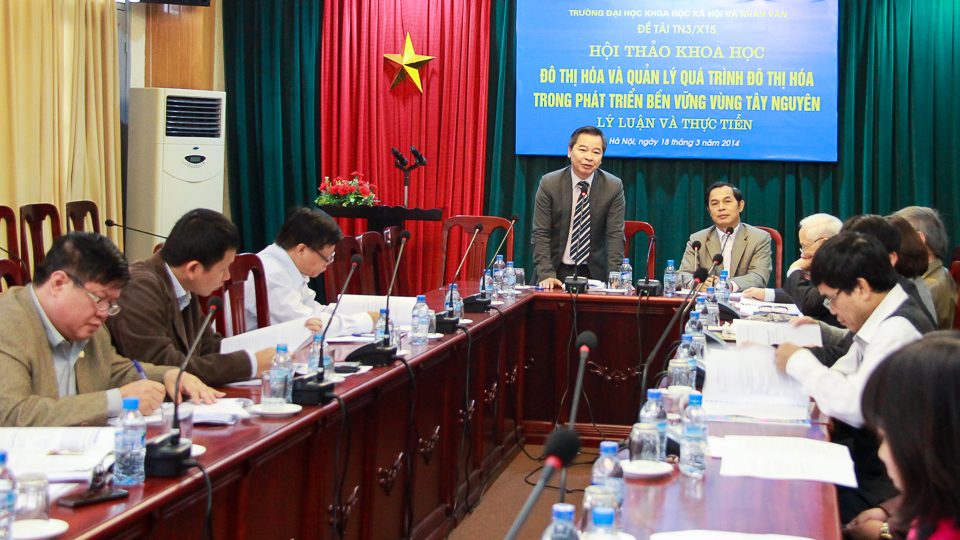
The school's international cooperation activities contribute to affirming its position as a leading representative of Vietnamese education, attracting and diversifying external resources for development. Among its more than 90 partners are many of the world's leading prestigious universities such as: Princeton University, San Jose State University, University of Utah (USA), University of Tokyo (Japan), Moscow State University (Russia), Nanyang University (Singapore), National Taiwan University (China), Shanghai University (China), University of Toulouse 2 (France)... Many international cooperation projects have been implemented such as the Anthropology Development Support Project (Ford Foundation), the Anthropology Research Project (French Development Agency), the Religious Studies Project with the Missio Institute (Germany), the Vietnam Education Policy Reform Research Project (Rosa Luxembourg Foundation, Germany), the European Teaching Capacity Building Project in Vietnam (Jean Monnet Foundation, European Commission), cooperation with the Toshiba Foundation, the Korean Studies Foundation…
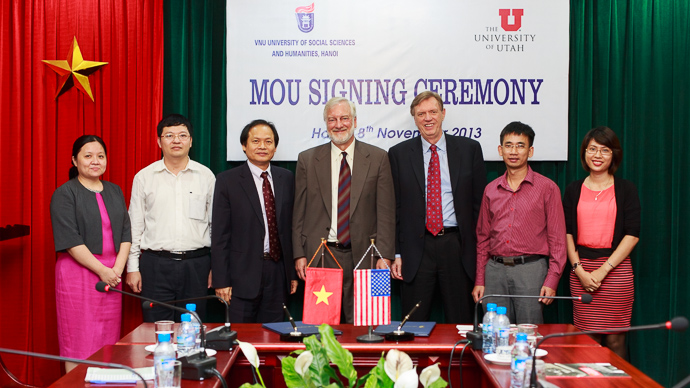
The University of Social Sciences and Humanities signs a cooperation agreement with the University of Utah (USA).
The success of the University of Social Sciences and Humanities over the past five years is due to the University Party Committee's effective work in political and ideological affairs, fostering consensus and cohesion throughout the Party Committee. The traditional strength of a university with a 70-year history has been maximized, becoming a source of pride and a foundation for all successes. The spirit of creativity, pioneering, continuous innovation, and daring action, based on a deep understanding of the University's mission and responsibility, and of social sciences and humanities in the development of science, education, and the country in the new context, has enabled the University to transform itself in a timely and appropriate manner, aligning with global trends. On the eve of the University Party Committee's establishment, these achievements will be a source of pride, giving the University added strength and momentum for a new phase of development with a stronger spirit of innovation and creativity.
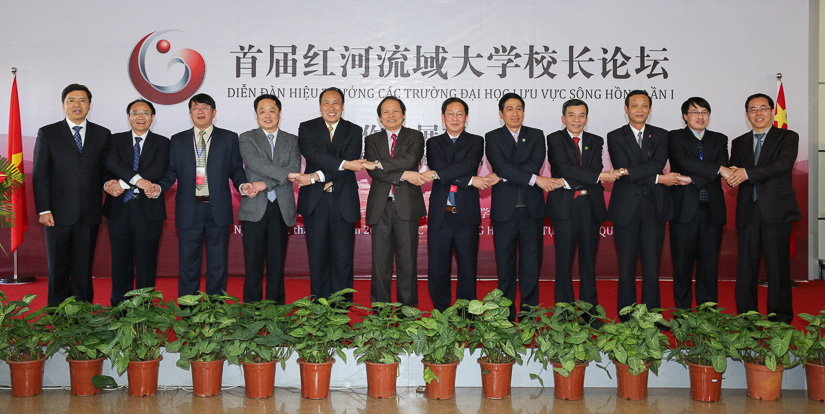
Professor Nguyen Van Khanh, Secretary of the Party Committee and Rector of the University of Social Sciences and Humanities, attended the First Forum of Rectors of Universities in the Red River Basin at Honghe Academy (China) (January 2014).
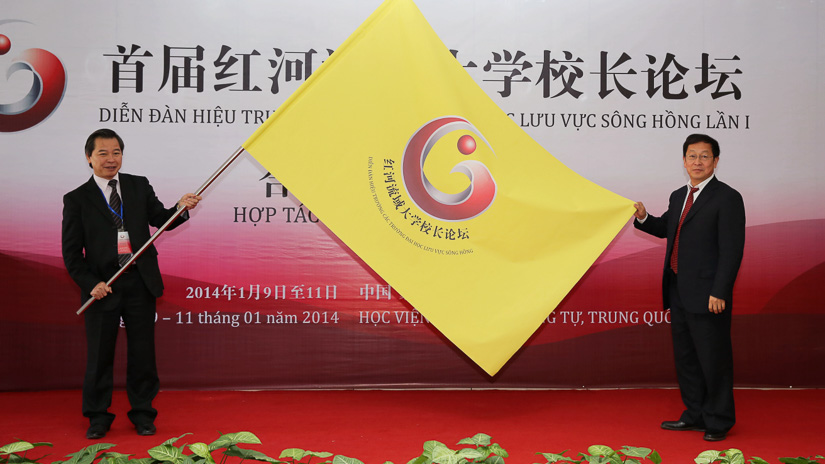
Assoc. Prof. Dr. Pham Quang Minh (Vice Rector of the University of Social Sciences and Humanities)We have received the flag to host the 2nd Forum of University Presidents in the Red River Basin, which will take place in 2015.
Author:Professor, Doctor, People's Teacher Nguyen Van Khanh

